 What Happens?
Young mother Madylyn Mabry puts her daughter to bed while her husband Jack watches a ball game on television. A bee buzzes around the window as she stays with her girl. After the child is asleep, she goes downstairs and announces she's leaving, saying "You keep my soul in a dungeon." He takes a moment to disconnect from the game, then runs upstairs to the bedroom and holds their daughter out the window, threatening to drop her if Madylyn leaves. "Do you think I won't? Do you think I won't?" he yells at her. She agrees to stay.
Many years later, Jack Mabry(Robert DeNiro) and Madylyn (Frances Conroy) return home from church for a quiet afternoon. He watches TV and drinks in an identical pose to his younger self in the earlier scene, while she works on a puzzle. Late that night a call wakes them. Jack picks up the phone and hears a woman's voice. "Betsy?" he asks, obviously distressed. We find him at church the next day, speaking at his brother Bobby's funeral.
Jack reports to work at a prison, where he's a parole officer. He listens to Christian radio in his car on the way in. Once there, we see him talk to different inmates but hear a persistent buzzing in the background as if to suggest that Jack has other things and pressures on his mind. He's called into the warden's office and asked to shut the door. The warden calls one of his reports "an incompetent mess." before laughing and revealing he's joking. He then asks Jack to get Janice, his replacement, up to speed on his cases before he retires. Jack agrees, but requests that he keep all of his "currents" until he leaves, in order to see them through until their reviews. Janice offers condolences about Jack's brother. Jack has a new case in his office, named Gerald Creeson (Ed Norton) Jack reviews his file as if the man isn't there. He insists that he likes to be called Stone. Jack is hesitant to oblige, assuming it's a prison nickname. Stone asks Jack if he can help him get out early, pointing out that he acknowledged his guilt and isn't interested in talking about what he did when it's all in the file. Jack wants to talk about his crimes however, and Stone has an outburst assuming Jack isn't interested in helping. Stone dares him to give him the maximum and starts walking out. Jack then yells at him, letting him know that they talk about what he wants to talk about and demanding he "sit the fuck down."
Jack then explains, "Look, this is the process, we talk. We're not friends, but let's pretend we're friends. Just relax. Just talk. That's all.Then maybe we both get what we want. OK?" He then asks Stone about his wife, Lucetta. Stone describes her as a "dime" which he explains to Jack means "a perfect ten." He also tells Jack that she's an alien. Jack assumes he means she's an illegal alien, but Stone says "No. She's whiter than you. She's from another planet." Stone describes her sexuality graphically, telling Jack, "She's crazy. She'll do anything." He warns Jack "Look if we're gonna talk about Lucetta, you gotta watch out cause it's gonna give you some pictures in your head, gonna keep you up nights, man." When he notices that Jack doesn't look pleased, he apologizes for his mouth. Stone asks about Jack's wife. When Jack says he's been married 43 years, Stone remarks " 43 years and you still get it on and everything?" This offends Jack and Stone tries to explain, he's just curious about how he'll do when he's older. Jack explains that he doesn't discuss his wife that way. He tells Stone "I don't consider this polite conversation." and reminds Stone that they're there to talk about him.
Jack drives home listening to more radio, and buying a couple of bottles of booze on the way. He sits on the porch with Madylyn, both of them listening to a Christian radio program discussing predestination. Madylyn attempts to talk to him but he isn't even aware of it. She asks "Where have you gone?" Jack meets with Stone again and asks him to recount the arson incident. Stone tells him that "Teach" and his grandfather got into a fight which ended with Stone's grandparents dead, before Stone torched the house. Jack wants to talk more about it.
Jack: Whose idea was it?
Stone: I told you it was Teach! Like I said I wasn't even...I went outside the house.
Jack:Yeah, but you didn't stop him, did you?
Stone:Stop him what?
Jack:From killing your grandparents.
Stone: You ain't gonna do it man. You're not gonna...You don't give a fuck man. I was outside. Teach come out and I didn't even know what he done until he told me. Teach testified to that, man! That's why I didn't even catch the rap for manslaughter. I got accessory and arson. I've done eight out of ten to fifteen. What more do you want, from me?
Jack stares at him blankly.
We then find Lucetta (Milla Jovovich) at a preschool working with kids. She smiles, telling the class that today is a day for them each to do one nice thing for someone else and not tell anyone about it.
Madylyn is hosting a card game for her friends. She gets a phone call from a woman looking for Jack, the sound of the call is distorted, but the caller hangs up when she says she'd Mrs. Mabry and offers to take a message.
Stone calls Lucetta from prison and catches her watching the kids at recess. Lucetta tells him that "she was short with me, like she didn't want to talk." Stone asks "Why were you talking to her?" He tells her "I need you to do this for me right now. Don't let it slide." She says OK. We see Stone having another meeting with Jack who says
"I guess what I'm getting at, is do you believe what you did was wrong?"
Stone: What do you think, because I grew up west side, that I'm one of these socio...delinquent types, don't know the difference between right and wrong? Want me to tell you about my bad childhood?
Jack: I don't know. Did you have one?
Stone: Well, at the time, I thought a lot of shit was normal...definitely unhealthy, but on the same token, i didn't think I was a bad person to begin with. You want to know if I'm gonna light any more grandparents on fire?
Jack: Are you?
Stone: No.
Stone tells him he deserves to be free, telling Jack "I'm as clean as you." Jack says "Maybe, maybe not."
Stone: Seriously, let me ask you something, you know? Why do you gotta sit there, asking me these questions, like you never done nothin'. Why do you get to walk around free and I don't?
Jack: I wasn't convicted of a crime.
Stone: You never did anything bad? You never did anybody no wrong, had to be forgiven for nothing?
Jack: I never broke the law.
Jack shuts him out, staring blankly again while Stone asks him about the many things he could have done. Stone claims he's been reborn, but can't answer when Jack asks what "reborn" means to him.
Lucetta stops at the prison for a visit with Stone. She likes his cornrows, and the two are cautioned against contact when she starts kissing him passionately. He asks for an update on her contacting Jack. She tells him she's left messages and he hasn't called her back. He instructs her "You've got to get with him person to person." She tells him she didn't wear panties just for him, and he touches her but restrains himself before getting carried away, not wanting to break the rules. He says "I can't get no ticket.You understand right? I'm too close." She appears disappointed but agrees. He tells her he's got to get out or he's likely to kill himself, which she tells him not to joke about. Stone becomes fascinated with another prisoner reading the Bible to his son. After the visitation is over, he gets every religious book he can from the library.Nothing seems to catch until he finds one on "Zukangor" This religion is a patchwork of many and instructs that enlightenment can be achieved by hearing the "perfect pitch" making yourself "like a tuning fork."
That night Lucetta leaves a message on Jack and Madylyn's answering machine, before calling up a guy for sex. She's waiting for Jack outside the prison the next day. He tells her it isn't appropriate to meet this way, acting as if she's there to see Stone and reminding her of proper channels to do that. She then offers him a bird's nest that the kids in class made, which he refuses but then reconsiders when she describes the kids making it. Jack asks Stone about it, but he says that Lucetta does whatever she wants. Stone runs the Zukangor faith past Jack, describing the tuning fork idea and their practice of chanting then listening.. Jack isn't into the idea, saying he's Episcopalian. Stone explains that the religion also uses reincarnation, stating you have to come back until you get it right. Jack asks him "What about this life?" and Stone tells him he's thought about that a lot.
Jack and Madylyn go to church, but Jack stays behind to talk with the pastor, telling Madylyn to go home. He tells the pastor that faith seems to come easy for people he knows but not to him, he says "sometimes the thoughts that I have, I think you should shoot me."
Pastor: I don't think that's what God wants for you.
Jack: What does he want?
Unable to give a concrete answer the pastor quotes a verse saying "Be still and know that I am God." which he paraphrase to Jack as meaning sometimes God speaks in mysterious ways.
In the prison yard, Stone tries the chanting, but seems to find it too noisy. Lucetta calls Jack's house again, Madylyn picking up the phone first. When Jack asks who it is she says "a friend of yours." He tells Lucetta she shouldn't call the house, making a point to call her Mrs. Creeson although she insists on Lucetta every time. She wants to know when they can meet.
Jack: Look Mrs Creeson, I have business with your husband...
Lucetta: Well that's why I'm calling. I mean, what, did you think I had another reason?
Jack: Well, no, I didn't.
Lucetta: Maybe we could go to lunch. You could bring Mrs. Mabry too. You know she's got such a sweet voice, what's her first name?
Jack: Look, I admire that you love your husband and that you want to do what's right for him, but you're not helping him. I'm telling you that right now.
Lucetta: [raspy voice] Oh Jack I do love my husband. I love him so much, and all I'm asking you, is for a chance to help you see him in a different light. i mean, how many men at that place you work at have somebody loving them like that? huh? Doesn't that mean something to you? A man in a position like yours?
Jack: No. It does.
She describes how she misses him in her bed, and Jack goes quiet, looking around self consciously. Madylyn is somewhere close by. We then see Lucetta visiting Stone. She tells him "I got him. It's gonna happen." Stone looks dead tired and looks at her coldly. He complains that it's too loud all the time and he's having weird dreams. He talks about suicide again, and she assumes he's referring to a dream, and then asks him if he ate spicy food before bed.
Jack meets Lucetta for lunch. He starts talking about his grandchild, and mentions that his daughter's getting divorced, explaining "People are gonna do what they're gonna do." She notices him fidgeting with back pain. She mentions magnet therapy as a suggestion for his back, explaining that the magnets remove toxicity, from cell phones and everything in the environment. Lucetta has an egg which she tells him she has to eat because the kids painted it. She offers it to him, making a voice to indicate the egg talking, she says "Eat me." He says "Why not." and takes a bite saying "I'm just eating the healthy part." She says "Go on, just eat the whole thing." They end up at Lucetta's place where she asks him if he feels the magnets. Madylyn sits at home on the porch in the dark, smoking cigarettes. Jack has a few drinks and ends up sleeping with Lucetta.
Stone is lying in bed in his cell and two guards come to get him asking what's wrong and escorting him to Medical. While he waits for someone to see him he witnesses another inmate being brutally shivved. Stone sees it occur through a barred door, close enough that he gets blood on him. He reaches out to the dying man through the bars, wide eyed, as if he's realized something. We hear a high pitch in the background, as he looks in the dead man's eyes.
At Jack's house the next morning, Madylyn reads from a devotional book aloud to Jack, asking "To what extent is my commitment to obey God based on do's and don'ts or out of true love for him? In what recent circumstance was I aware of God's leading?" She asks Jack, "Why don't you say the blessing?" which he does, saying a standard prayer but adding "Make us mindful of the needs of others." eliciting a look from Madylyn. She asks Jack if he wants an egg, and he quickly declines.
Stone sits in the cafeteria, looking more peaceful, and seems able to block out the noisy room. Jack drives listening to the radio which says "We are not sinners because we sin. We sin because we are sinners." He goes to a field to drive golf balls, but soon goes to see Lucetta again for sex, which she seems pretty open about, telling Jack he's a good man for "helping them" while they're in bed. Jack tells her sternly that nobody is to know about this, warning that whatever it is she wants will "all go bad if anybody knows." She just says "Of course silly."
Stone is out in the prison yard staring at the sky, and we see that he isn't affected by the noise. He goes in to visit Lucetta and asks her "Do you ever wonder about things they say go on forever?"
Lucetta: What?
Stone: Things they say go on forever - like... what's that mean, you know? The sky, like, they say the sky goes on forever. But what is that really? That's - I mean, you can't see nothing you can't see, so... it's like a big bowl of blue above you. You can see clouds during the day or you can see stars at night maybe, but even with a telescope you can't see forever. So how do they know?
Lucetta: Know what?
Stone: What it is. Eternity - how do they know?
Lucetta changes the subject saying "So Jack, he said the board's gonna review the whole thing. Okay? And they're gonna take into consideration your age and, you know, your Mom, and all that and the fact that you were an addict back then. [noticing he doesn't appear to be listening] Stoney baby, look at me. I was trying to tell you about your parole!
Stone: Yeah
Lucetta: Well, you weren't listening.
Stone: Oh yeah, I'm listening.I am.
Lucetta: Ok. So Jack said...
Stone: You call him Jack?
She explains what Jack plans to do and tells him it's great but Jack is distant. HE says "Sometimes i think the best thing is to just listen." prompting her to cry and tell him to "stop playing."
Jack is angry when he comes into work the next day. He meets with Stone who attempts to explain something about his experience with the inmate who was shivved. Jack doesn't seem to get any sense of what he's saying, reading in his notes that Stone had "a profound spiritual epiphany." Stone says he's never heard that word before, and tells him they can drop it. Jack says "Don't get me wrong. I'd like to believe in such things."
Stone: Like what? Like me? You believe in me?
Jack: Sure, I'd like to believe in you too. That's why we're all here, right?
Stone attempts to describe it again, as a moment when "all the static went away, and I could hear for real." He explains that he now sees that his life in prison isn't empty and pointless like he thought it was. He tells Jack, that the efforts he'd asked him for earlier aren't important to him anymore, saying "You should do what you think is right. Okay? I am whatever you say I am in there. So write what you feel. Seriously." He explains that he wants to be out but is likely to have the same problems he's always had when he gets out.
Jack stops by to see Lucetta again, and tells her what happened. She tells him it's probably "some kind of play acting." and that he's always had different ideas about things. Jack tells her "It was different." and asks her to "be straight. Is this all just an act/ Just tell me what's going on." She tells him "I don't do anything I don't want to do. I like you Jack. I would never fuck you if I didn't want to." He tells her he's not going to come by anymore but she tells him he will. She says that even after Stone gets out, they can still be friends too. Jack still tries to leave and she mentions that Stone is "a good man at heart." He seems shacked and asks "Do you really believe that." She says "Yeah I do. no different than you and me." Jack asks if she goes to church ans Lucetta says "Hell no. There's no such thing as God." Jack gets home and showers before going to bed.
The next day, he tells Stone that he sent the report recommending early release. Stone seems antagonistic about it and surprised. He goes over the details of the night of the arson, describing seeing his grandparents dead when they were alive two minutes ago. He says that he heard a loud buzzing in his ears and knew that there needed to be a fire. He asks "You ever seen a fire take control? It's something, It's alive. I watched it take them up and start to change them. And the only thought that came in my head was 'This is awesome.'
Jack: Awesome?
Stone: Yeah. It was truly awesome. And the thing is, I know I'm supposed to take responsibility for my actions. I know that I'm supposed to feel guilty about it, but I never did, and I never knew why. But, now I think i can understand that it was just part of what was supposed to happen in my life's journey. You know?
Jack: That was your decision.
He explains that they're all God's coworkers, without knowing it. Jack insists it has nothing to do with God and cuts him off.
Jack: Enough of this shit. You know...You...Lucetta, she said that you were...
Stone: Lucetta?
Jack: Your wife she...
Stone: You call her Lucetta? Don't...
Jack: What?
Stone: Don't listen to her.
Jack: What do you mean?
Stone: Don't listen to what she's telling you man.
Jack: She believes in you.
Stone: It's a game to her. It's a game. I told you in the beginning, she's an alien. She's like a freak.
Jack: That's not a nice thing to say.
Stone: No. Listen, I'm telling it to you straight. She's just working on you.
Jack starts to get angry and tells Stone he's nuts that he has "a beautiful wife that cares about you..." but Stone asks "beautiful? you think she's beautiful?" leaving Jack speechless a moment.he recovers
Jack: Okay, you're a con, I've known that from the start. I didn't believe you for one fucking second. Never did. Never did. So you've both been conning me? Ok. I know. I've been around the block a few times. Sick and fucking tired of it.
Stone: What'd I say man?
Jack rants about being conned and his frustrations, that "no one changes for the better." Stone asks him "Do you have anyone?" which only angers him more. Stone then advises him to "blow your life up. I'm pulling for you." Jack gets irate and starts yelling at the guards to come grab Stone. JAck drives home without the radio. Late that night, Lucetta leaves a message on the machine, saying she needs him to call as she's in the dark on everything. The next morning the phone rings while he and Madylyn are eating breakfast and she tells him to let the machine get it, but he doesn't getting up to get the call, to find it's their daughter. That night he sits with Madylyn on the porch. She's been reading Zukangor, and tells Jack he started out as a stone, and worked his way up to human, and each incarnation has been paying off debts. He realizes she's reading from a flyer which she tells him was junk mail and she says "You know what I think? I think we get this one life. I do. You account for what you've done and if you don't you pay for it when you die. You don't think?"
Jack: Oh [beneath his breath] Shit.
Madylyn: Shit. Shit. Son of a bitch. Fuck. Fuck.
Jack: Ok. I get it.
Madylyn continues swearing at him, when Lucetta pulls up in the dark, and approaches the porch. Jack gets up to persuade her to leave. He calls her Mrs. Creeson and attempts to act official until they get to the car and he says "Get in the fucking car." She asks what's going on with her husband and angrily says she just needed a friend to talk to, but drives away. He acts outraged about her coming to their home for Madylyn's benefit.
At work in the morning, Jack is asking the warden for Stone's report back, explaining he made an error. The warden isn't happy, as the hearing is in an hour. The warden tells him that it doesn't matter as Stone's fate is already determined by "luck and quotas." Jack doesn't stay for the hearing. We see that he takes his gun when he leaves the prison. Jack is at home drinking with Madylyn, who is discussing their devotional book. She mentions that they'll be looking at the commandments next. Jack asks her "Do you believe in all this?" and she tells him to read the next lesson. "What request is on the top of my prayer list today? Is it a selfish request or is it one that will bring God glory?"
Madylyn: I know what I want. How about you? You lost your place again? Is there something you want to say to me?"
Jack: [shakes his head]
Madylyn: You don't?
Jack: I can't even think of what you'd want me to say.
Madylyn gets up from the table and leaves him there.
Stone is informed that he'll be released.He stops in to see Jack while he's waiting. Stone asks if he wants to talk about anything, as he "looks a little ragged." Jack reminds Stone that he can have him watched twenty four hours a day. Stone remarks "Shit man, you don't believe in nothing do you?"
Jack: I believe you're one sick son of a bitch.
Stone: I know you don't believe in me, but you don't believe in yourself. You don't believe in God. I don't think you feel that anything is true inside.
Jack: I'll give you true. I'm glad you're out of my hair Gerald Creeson. Now you can be someone else's headache.Jack makes it clear he wants him out of the office. Lucetta shows up to pick him up and comes into the office. Stone asks if he can kiss her and Jack says that's fine. He tells her he's ready to go, but Stone turns back before leaving and says to Jack "You know I want to thank you. Seriously. I appreciate everything that you've done for me."
Jack nods uncomfortably and looks at Lucetta and says "Good luck to you too Mrs. Creeson." She answers. "Lucetta, Jack. We're all friends here, right?" He says "Take good care of him." She whispers "I will. You take good care too old man. See you later Jack." As Jack is about to shut the door behind them, Stone stops and says "I meant to say, Lucetta, she did tell me that you fucked her. I know that must be against some kind of rule around here.
Jack: I knew what you two were doing.
Stone: Oh, did you know what you were doing when you let my wife suck your cock?
Jack: Good luck to you.
Stone: See you out on the bricks.
Jack: Good luck to you!
Jack gets home and that night we see he's taking his gun out to the porch. He remembers Lucetta telling him she liked him as he tries to sleep. He thinks he hears noises downstairs and keeps his gun in hand to go look. He finds a fire downstairs, and goes to get Madylyn who is already awake. Watching the house burn Jack keeps taking the lord's name in vain, which she repeatedly tells him she won't stand for. He remarks that they were almost incinerated by "some nutjob I let out." and she insist that "nobody did this to us. It was an act of God." She makes up a story about frayed wiring in the kitchen wall and rags in the basement. "Why would you say that?" Jack asks and she say "Because. it's as good a story as any."
We see Madylyn with her daughter and granddaughter, looking through photo albums. Her daughter says "I don't know how you stuck it out as long as you did. I'd think you'd have done this sooner." Madylyn says "I almost did, once." although she doesn't answer when asked "what happened?"
Jack is at the bar with his coworkers, for his retirement party. He starts giving Janice, his replacement, advice about all the cons she'll be dealing with. He starts hitting on her, but she insists they keep things professional, but he starts swearing at her and then at the warden who steps in. They offer to drive him home but he insists on leaving himself. He listens to the radio, which is about God having Satan on the ropes, but Satan is flailing his arms which causes damage. Jack sees Stone walking down the street and approaches him with gun in hand asking why he ruined his life. Stone says "Hey man you ain't gonna do this." which causes a reaction similar to the beginning with Jack saying "You think i won't? You think I won't?" with a gun to Stone's face. With the gun still on him, Stone shakes his head and says "No. No I don't." He looks at Jack before walking away. Jack goes into work to clean his office. We hear the radio station again, and we hear Stone, describing the sound which brings spiritual truth and the tuning fork idea. Stone packs a bag and starts walking down the road. We see Lucetta at a bar trying to get a guy's attention. Madylyn smokes a cigarette alone looking over a fence. She hears a bee buzzing, which also seems to be heard by Jack, in his old office, who looks up from packing.
What About it?
Make no mistake, Stone is not an action movie. Although John Curran includes all the trappings of a good crime thriller, this is not a crime thriller. If you're interested in a movie about broken characters and the effects they have on each other, without a bow to wrap it up at the end, you might be ok. That isn't to say things don't happen, they do, but it isn't about them, per se. Stone is more about how we deal with our dark sides and the lengths we'll travel to make all the randomness make sense. I'm not sure that I'd call it a great film, but it's a worthwhile one, full of great performances and interesting thoughts. It's a great looking movie and it manages to feel like a neo noir, but plot wise it takes it's own direction and it's characters seem more concerned with their own journeys than our expectations.
Not accidentally, everyone in the film is a mess, but everyone is broken in their own way. Everyone also thinks the story is about them, and in a way that's true as the connections between each of them dissolve. Every character has own faith or lack of it and a question central to the characters is the question of free will. Jack's radio programs ponder this endlessly, although they try to have it both ways, painting man as a creature who "sins because he's a sinner, not a sinner because he sins." yet on the other hand valuing choice. Jack and his wife share a religion. They're Episcopalian. They share it for different reasons however. Jack is a guy who doesn't expect any joy from life. He has terrible thoughts, by his own estimation, but loses himself in routine and daily drinking. He wants the things a man is supposed to want, precisely because he's supposed to want them. At the beginning of the movie, we see young Jack living his American Dream, a nice little house, a pretty young wife, a daughter put to bed upstairs, a game to watch on TV and a drink in his hand. None of these things matter to him, as what they are. They're the things he should have and it's his duty to keep them. Jack has no real emotional attachment to any of it. He lives his life by rote. The fact that he can consider throwing his daughter out a window to make his wife stay with him, shows us that they are both tools to him. He doesn't strike his wife, or even argue with her, he simply does the thing that he's calculated will end the discussion quickly. We can look at this and easily call Jack a monster, but he may be a monster in a different way than we think. Jack tells us that he has terrible thoughts and most likely he does, or he wouldn't have been holding his daughter out a window. The thought wouldn't have entered his mind. Yet, we have to allow for the possibility that Jack is not only a monster but a powerless one at that, and it's likely that despite his anger, he never would've dropped his daughter, and it was always a melodramatic bluff from the beginning. He uses the same words at the window, as he does later when he holds a gun to Stone's face. "You don't think I will?" This tells us a lot about the character. He's trying to prove he's a monster, the ultimate Alpha male. With his wife , he achieves that, because, even if she doesn't believe him, she can't entertain the possibility for a second that he isn't bluffing if it means gambling with her own daughter. With Stone, the same gambit fails, because Stone doesn't believe him. Jack doesn't really care about anything, but knows how other people act and what's expected and emulates that. perhaps hoping that the satisfaction he imagines other people have will rub off if he does what they do. From that day forward, he knows his wife isn't with him by choice, but he doesn't care. He isn't concerned about his daughter's affection either, if her remark to her mother, about how she should have left him years ago is believed. He feels no satisfaction but has no other solution, so he keeps on going, because maybe others thinking he's normal counts for something.
Madylyn is another story. She's something of a martyr, staying with a man she despises for decades, for a moment out of fear, but eventually out of habit. We see Madylyn years after her daughter has left the house, acting as if their home life is normal. They go to church come home, sit on the porch and drink together, eat together, study the Bible together. When he watches TV she keeps herself busy. Yet, she has never forgotten the feeling that he "keeps her soul in a cage." Her drinking helps some, but even without out it she walks around like a sleep walker, who knows what's happening around her. Her chief satisfaction is sneaking in barbs, that Jack is well aware of, but on the surface, could pass for harmless banter. When he tells Jack to read the devotional about "selfish prayer requests" I suspect she knew exactly what he would be reading and he likely knew that before he read it, but to refuse would break their suspension of disbelief. Her faith means something to her and this is largely due to Jack, as she implies on the porch when she says she believes people account for themselves in this life or pay after they die. This is her consolation, that his responsibility for her decades of swallowing her chance at happiness will not go unpunished, and in her belief, that punishment is serious. She knows that Jack is not the good man he tries to portray himself as, an she has to remind him of this, but not in a way that would disrupt their life. She could easily bring his activities with Lucetta out to his attention but she doesn't, not even when she's walking towards the house, talking to her by name. This is the straw that proves too much however, and strains her illusion enough to finally snap. When it does snap, she isn't content just to leave, the house to her, is an abomination, a symbol of her misery and nothing will do but to burn it down. It isn't certain however, that she intended to get out of the house. If Jack hadn't woken up and come to get her, would she have let the fire grow until they were both trapped? It seems possible, but he did wake up and so she has a chance to start over.
Stone is a character that's interesting, because on the one hand, he's a natural manipulator, but on the other, he doesn't know exactly what he wants. It would seem that some of his talk is authentic, but what he chooses to share and when, are as important as the content. He begins testing Jack immediately, threatening to walk out the door and take the "max" is actually a challenge to get Jack invested in his case. The chance to help someone who didn't want to be helped is too much for Jack's pride to turn down, as well as a chance to thump his chest and assert his authority. Stone notices that Jack allows his frank sexual talk about Lucetta go on, not objecting until the talk shifts to his own sex life. She's an alien, he says, as exotic and enticing a description as could be thought of, to a man who is obviously not content and has been married for many years. Jack does change the subject eventually, but Stone has already suggested some visions he can't get out of his head, none of which mean anything however unless he meets her in person and has an actual woman to attach the talk to. Stone is a natural manipulator, used to playing a role most of the time, which changes depending on what he wants. The only indication he gives is a cold glare in his eyes which pops up every now and then, as if to see if his mark is buying the act. Only Lucetta is aware of this, although she still buys his act at times, somewhat willingly because she loves him. It's no shock to him that Jack has sex with Lucetta, as he really can't have any other reason to urge her to meet him in person so insistently. He knows his wife very well and from their conversations, it's clear that this is leverage that he wants to have. This doesn't keep him from giving Lucetta a hard time about it, perhaps just because he can. Watching him toy with Jack, telling him things designed to make him hesitant to recommend early release, in order to watch Jack rationalize the deal he thinks he made by sleeping with Lucetta is interesting. Jack ends up playing a similar game with Stone as the the one he plays with his wife, hoping that if he doesn't mention the elephant in the room, it may go away. He suspects that Stone knows, but assumes that he does not. Watching the change in Jack, when Stone says "You call her Lucetta?" (and the same trick with Lucetta) gives away the whole dynamic. It's enough to rattle Jack, who is looking for holes in the situation, not believing he's good enough to sleep with Lucetta. However, based on what we see when Stone is not playing for an audience, we can gather that his "conversion" is sincere. He is changed after witnessing the shivving, although how much we don't know exactly. This muddies his manipulations to some degree and adds the possibility that he does have some actual concern for Jack, and actually does have some second thoughts about early release. He is however, as he himself points out, the same guy, with the same struggles, an he can't resist telling Jack that he knows about him and Lucetta, although he doesn't seem to have any interest in using this knowledge, other than to throw Jack off balance. His true relationship with her, is unclear, as he has little trouble offering her as a ploy to get released, but we see her left to her own devices, soon after she gets him out. Stone is a con man who doesn't care about objectives. He seems to get satisfaction from the game itself. His interest in "Zukangor" seems quite quite profound to him. The reincarnation aspect combined with his suspicion that they're all "God's coworker's" although they don't know it gives his life more sense than it ever has, allowing him to reason that the things he's done were the things he needed to do for "his journey."
Lucetta is the most straightforward character. We know that she really loves her husband, but has no problem with sex with other men. She tells Jack, that she doesn't do anything she doesn't want to, and we can believe her. We know that she has sex with men besides Jack on her own terms. Her tactics when dealing with Jack are interesting, simply presenting a situation which Jack can take advantage of. She doesn't resort to any threats, merely assumes that in Jack's situation, is a sign of him agreeing to help them. Rather than threaten blackmail, she tells him he's "a good man" for helping them, while they're still in bed. Her interaction with Stone, telling him about Jack's upcoming recommendation shows her lack of feeling any guilt in the matter. "Didn't I do good?" she beams, although Jack's manipulative nature won't allow him to congratulate her. She has her own methods for dealing with Stone. We see her completely brush aside his talk of suicide, reframing what he says as if it's a joke and then later a dream. This is a simple yet effective device to brush his con aside. Unlike most characters, in her position, she doesn't have any desire to use sex for a power grab. When she drives to Jack's place and confronts him in front of his wife, she seems to simply want to know what's going on with her husband, and gets frustrated when Jack won't return her calls. She allows Jack to send her away and is quite sincere when she says "I just wanted a friend to talk to." She would likely have no problem sitting on the porch with Jack and his wife to discuss Stone's situation. Her faith is different than others in that she doesn't believe in God. She tells Jack that she's more interested in the body than the soul, reasoning that the body is the reality. This explains her interest in magnet therapy, and her confusion at Stone's new Zukangor faith. She chooses to live in the here and now without any guilt, agenda or maliciousness. Her simple motivations are an interesting buffer between Jack and Stone.
The acting is the real star of the movie. Norton, DeNiro and Jovovich and Conroy all give tremendous performances, giving us fleshed out characters, that are deep enough that we know we're only scratching the surface of who they are. Their actions alone and their interactions with each other show us the difference between who they are and how they like to appear. This is underplayed acting however, solid but not grabbing for attention, choosing time spent, rather than melodrama to reveal themselves to us. This are roles that stick with you, rather than demand attention outright, the actors subtleties matching the roles the characters try to play in their lives.
Despite possible complaints that "nothing happens." each character is in a very different place at the end of the film. Madylyn has finally freed herself from her dead marriage. Jack is stripped of all the the trappings he hid behind. Lucetta is for all intents a single woman, and Stone is off to seek out some existential answers. The bee buzzing at the end suggests that hey ended up exactly where they should've. Jack views his situation as a tragedy, but based on his behavior, it's hard to argue with Stone's advice that he "blow his life up." Without the elaborate hiding places, he may have a chance to really look at and work on who he is. The many questions of faith presented, aren't really answered, but they really couldn't be, each being a means by which the characters deal with the world. "Zukangor" doesn't work that differently than being an Episcopalian, offering some purpose, vague enough to be examined while offering a modicum of hope. Jack's verson of Christianity has more in common with Lucetta's atheism, than with his wife's sharing of, on the surface, the same faith. Yet a stark difference between Jack and Lucetta is that, although she's an atheist, she believes wholeheartedly in many things, while Jack claims to believe in one thing, but doesn't feel it. Jack is more of an actor than Stone is, although his con is much deeper, and mainly practiced on himself. None of the characters are right or wrong, due to their faith. In fact, none of the characters are right or wrong at all, they're simply broken and coping in their own individual ways. The lack of value judgements allows us to think about each character, what they believe and how this works or doesn't work for them, and the uselessness of judging others when everyone has to carry their own weight.

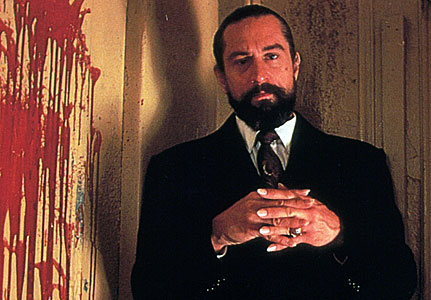


 When the word "anti hero" is used, odds are that in short order Travis Bickle comes to mind. He's definitely a character that stays with you, thanks to the painful story and DeNiro's amazing performance. Travis is the modern anti hero, not smooth or polished. He can't put a wisecrack together unless it's in front of the mirror. He's just a guy that wants to amount to something yet either doesn't have the character or the opportunity, only the painful awareness of everything he isn't. His only solace is his own convictions, he has strong opinions about many things most notably that the streets of NY are infested with scum, and need to be cleaned up.